

The Texas Tech University System Board of Regents met Thursday amid protests from students and faculty reacting to the course content review process and systematic "phase out" of programs and research centered on sexual orientation or gender identity.
System Chancellor Brandon Creighton, who initiated the curriculum review with a memorandum issued in December and phase out procedures with a memorandum issued in April, told the board of regents that out of more than 14,000 courses reviewed systemwide, less than 2% resulted in any recommended modifications.

"This effort showed the Texas Tech University System is helping define what compliance and accountability look like for the state and the nation through a decisive approach that reinforces academic integrity, but also ensures our students earn degrees of the highest value that prepare them for the future in this quickly evolving workforce," Creighton said.
Creighton has cited Senate Bill 37, which he authored while serving as a state senator for the Houston-area and passed by the Texas legislature last year. The bill shifted the authority on curriculum away from localized councils of faculty members who teach those subjects and toward the governor-appointed board of regents, while creating a state-level committee to recommend courses that should be required for graduation.
While Creighton said the new course requirements better prepare students for the workforce, some faculty and students disagree. The board of regents allowed honors college student Aaron Texador to speak in the meeting. He spoke favorably of a new master's of education program with a major in school counseling that was proposed in Thursday's meeting, but he also expressed concern.
"The story that I've been hearing, specifically in the psychology and education department, has been a story of fear," Texador said. "These teachers, people who have dedicated their lives to the pursuit of knowledge, are afraid to share it. They're worried that through Senate Bill 37, their classes, their jobs and their livelihood will be at risk simply for speaking on peer-reviewed scientific fact."
Other Texas universities, such as Texas A&M and the University of Texas, are also facing scrutiny over curriculum guidelines that opponents say are stifling academic freedom for the state, and reducing the credibility of Texas' higher education.
Texador said the prohibition on certain topics that are taught and accepted by experts and professionals in those fields can negatively affect the credibility of student degrees from Texas Tech, and the issue has already led instructors to self-censor out of fear of backlash.
"This new push to change your education for the sake of workforce preparedness puts us at risk of losing accreditation from national boards, having an inverse effect," Texador explained. "Now, you might be wondering why I'm speaking about this instead of them. I believe it's simple, they are scared."

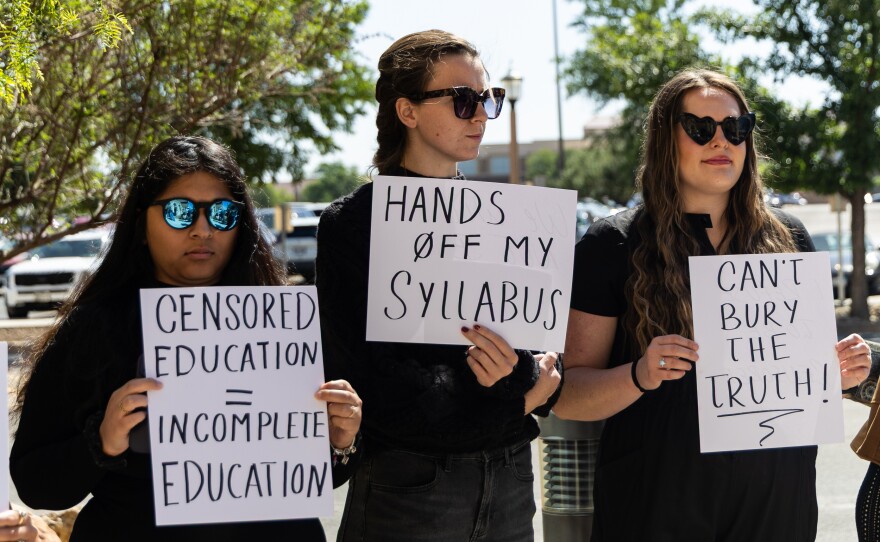
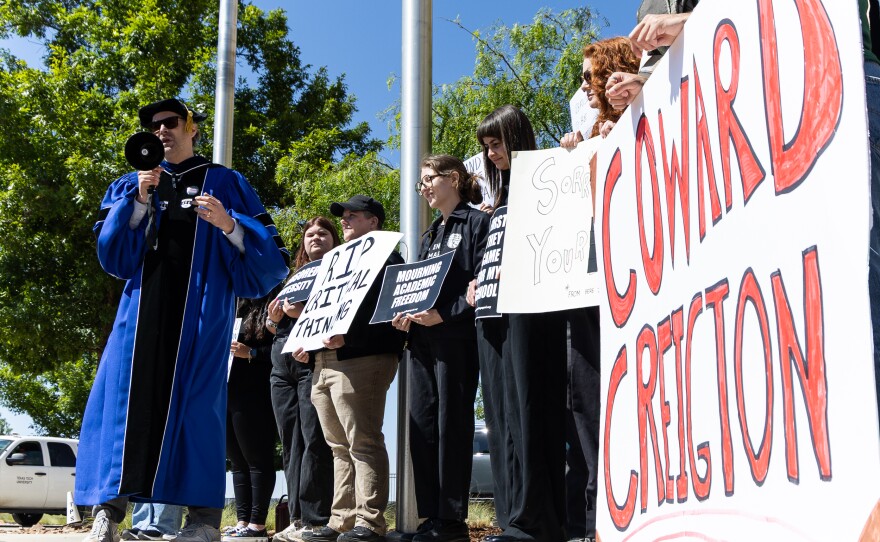
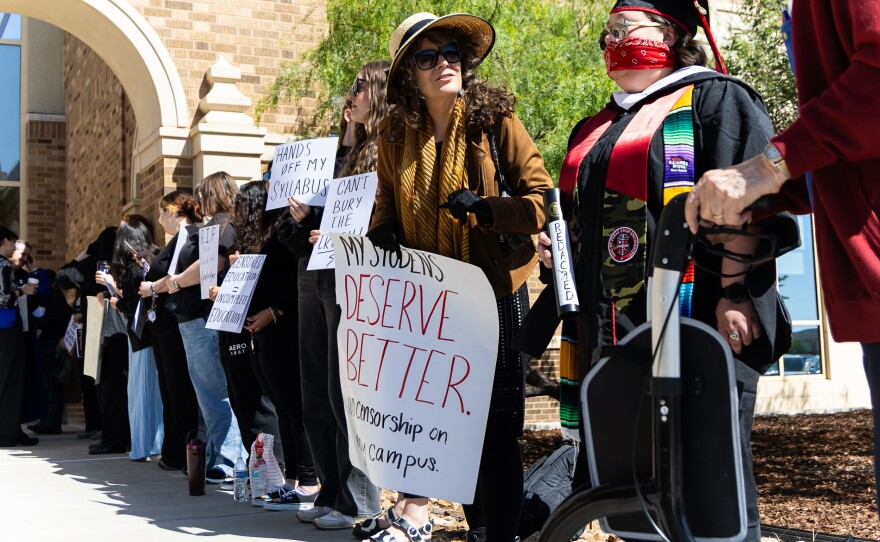


Outside the board meeting, students and faculty were not afraid of speaking. A horse-drawn funeral carriage carried an urn and stacks of books, as protesters – dressed as mourners – held signs accusing university administration of academic censorship.
James Snoddy is the founder of Raiders Against Censorship, a student organization formed in reaction to the memorandums from Chancellor Creighton's office and a planner of Thursday's protest. Snoddy said one primary challenge has been making students aware of the changes.

"A lot of the problems we have here is that students don't know what's going on, but once they find out, once we explain it to them, they're staunchly against everything," he explained. "I mean, the most recent memorandum on April 9 was not sent to students. I had to get it leaked from a professor to send to everyone, and we printed out for a bunch of students to read."
One place where Snoddy and Creighton may agree is that this discussion isn't limited to Texas Tech University and won't be ending with this semester.
"It's just precedent being set to go further, because, like they said in their first memorandum, this is only the first step," Snoddy said.
The April 9 memorandum further requires Texas Tech Provosts to review and identify degree programs and certificates that cover course content "centered on" sexual orientation and gender identity, and submit finalized reports to the Chancellor's office by June 15.
Copyright 2026 KTTZ 89.1FM