
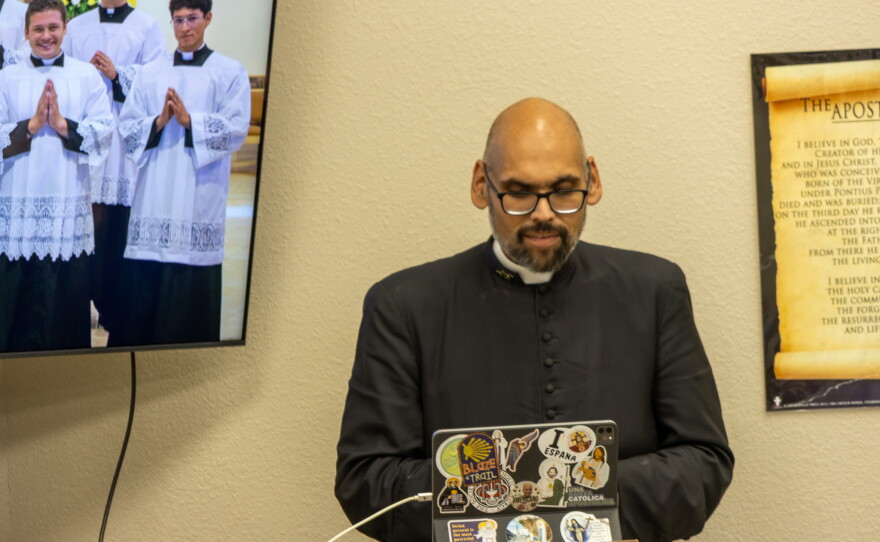
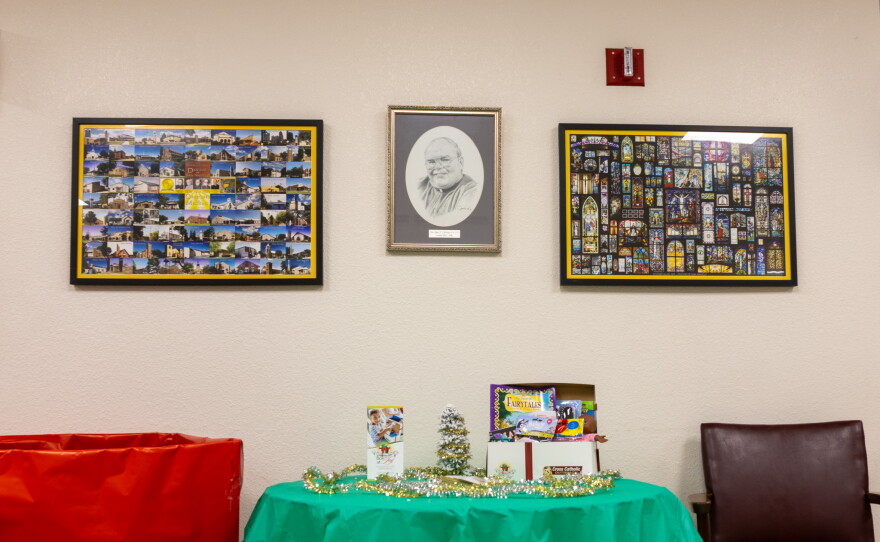
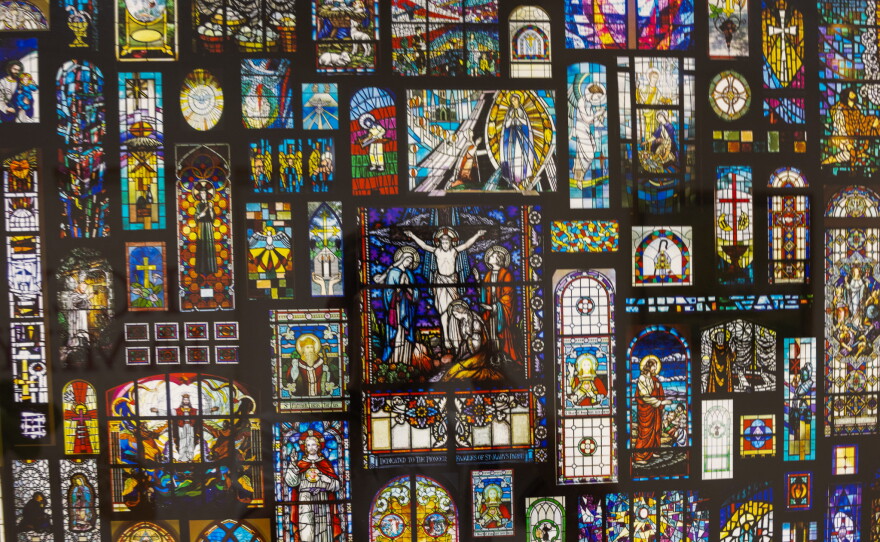
Over the last several weeks the Diocese of San Angelo hosted a series of dinners for young men ages 14 to 18. Parents were welcome, too. One of the last was at Holy Family Catholic Church in Abilene, where young men gathered to eat, pray and hear about becoming a priest.
Father Francisco Camacho says every one of the Project Andrew Dinners starts the same way.
"You always start with an icebreaker. Nothing good in the church does not start with an icebreaker, right?"
After dinner a priest shares his own calling story on video, and the night turns to what priests actually do.
Father Camacho is one of the diocese's newest priests, ordained this summer. He grew up Catholic, with an uncle who was a priest in Mexico. But he says like a lot of teenagers, he spent high school questioning everything. Then a youth conference changed things. At the end of the weekend, organizers invited anyone thinking about the priesthood to stand up.
"And for me, it was the same emotion and the feeling and encounter I had with Christ earlier in the weekend. So I knew... God was true, good and loving, and this was another experience of true, good and loving."
By his senior year, he had to pick a direction. He thought about becoming a band director, a lawyer, an engineer, and says none of it felt right. Then he was invited to visit a seminary in Missouri. He says he said yes for a simple reason.
"I said yes because they said the right things to me at that time: a free trip and free food."
But that weekend settled something.
"And I just knew that was the place I needed to go."

The Diocese of San Angelo oversees Catholic Churches in 29 counties in West and Central Texas. Father Ryan Rojo is the vocations director for the Diocese.
The Project Andrew dinners and recruitment efforts aren't new. But Father Rojo says when he was a teenager, finding the priesthood worked very differently.
"These things didn't exist back in my day, which is kind of more of an apprenticeship. So if you knew a priest, you hung out with the priest, you got to know the priest, and then he would recommend you for seminary. But I think we're a little bit more intentional in our outreach efforts, to try to cast a wide net to see who might be interested."
It's Father Rojo's job to cast that net, and to walk with seminarians through seven to nine years of training. And recruitment has become a big challenge.
According to Georgetown University's Center for Applied Research in the Apostolate, the number of Catholic priests in the U-S fell about 40 percent between 1970 and 2020. Over those same years, the Catholic population grew by roughly 46 percent. And a 2025 report from the group Vocation Ministry found ordinations tend to drop off once the average priest in a diocese serves more than 18-hundred Catholics.
Rojo says the Diocese is casting its net wider than ever.
"Whereas last year, we would commit ourselves to two dinners a semester, or two dinners a year, rather. Now we're looking at fourteen dinners this year."
Two Fordham University students made a documentary looking into why fewer men are becoming priests. It points to the social upheaval of the 1960s, the clerical sex abuse crisis of the early 2000s, and the rise of secularism.
The process is long, too. Father Camacho says his application ran about thirty pages, with a psychological evaluation and a physical. And he says the church has reason to be careful about who it lets in.
"We had a lot of bad men who entered the church for nefarious reasons, right? And so we do a lot of vetting now."
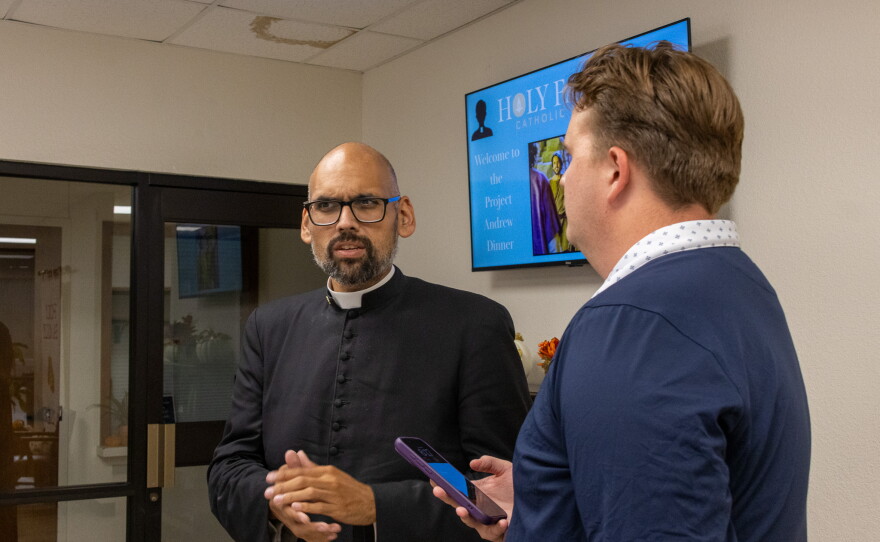
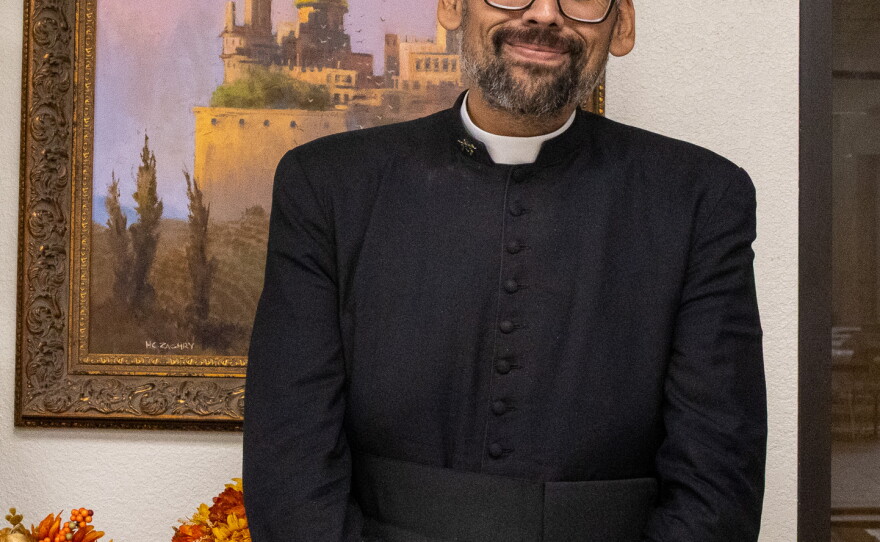
And he acknowledges entering the priesthood IS a big commitment.
"What you're thinking is a lifestyle, not a career. It's like you're restructuring your whole life, right? And that's daunting."
Francisco also says the shortage is felt in parishes that have to share a priest.
"You've got to start sharing your priest... and when you're sharing a priest, you're not getting his full attention."
But there is hope.
According to Father Rojo, the number of men entering seminary in West Texas has climbed steadily over the last few years.
That could be due -in part- to what some are calling the Pope Leo Effect. Cardinals elected the first U-S Pope in May of 2025, and the Pew Research Center says 78 percent of U-S Catholics view him favorably. One priest told America magazine he believes Leo's election has led more young men to consider the priesthood, though scholars the magazine spoke with say it's too early to tell.
Father Rojo's advice for a curious teenager is short.
"Come and see, come and see. Come and check it out. I think there's a temptation to maybe sit in the quiet privacy of a bedroom and think to yourself, well, maybe God's called me to be a priest. But I don't think you really can appreciate the priesthood until you take a risk and put yourself out there."
The Diocese of San Angelo will host seven more Project Andrew dinners next spring, and information is online at dosavocation.org.
Copyright 2026 KACU