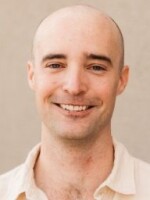
This year’s only contested County Commissioners race for Precinct 2, a rematch between Jeremy Davis and DL Wilson, is shaping up to be a contentious battle for the seat that once belonged to the only democrat on the Commissioners Court.
In the lead-up to election day, KWBU and The Waco Bridge sat down with both candidates.
Here is the transcript, edited lightly for clarity, from our conversation with Democratic challenger, Jeremy Davis.
Molly-Jo Tilton, KWBU: Two years ago you ran for this seat and narrowly lost. Pollsters are predicting big headwinds for Democrats going into this election cycle, but the precinct was also redistricted last year to include more rural communities, and those typically vote more Republican.
How are you feeling going into the election?
Jeremy Davis: I feel good going into the election. we've been getting great feedback from across Precinct 2, everywhere from East Waco to Mart and Riesel and back to North Waco. We've been, meeting with community members who are energetic, who are ready to vote, who want a change, who want a true representation at the county level. So, I feel good going into election day.
MJ T: What is some of that feedback you are hearing, what are some of the change that, people have been telling you they're wanting to see?
J D: Yeah, so I think people are really yearning for a commissioner who's present in our community, who, they know, who listens to their concerns, who's responsive to their needs.
I think people are excited to have a new generation of thought on our Commissioners Court as well, and just someone that they can depend on. They're looking for someone that they can rest their hat on and know that they'll be fighting and using their voice of, to uplift our community.
MJ T: Last year the commissioner's court undertook a mid-decade redistricting. The current commissioners have said that was not a political move, and your opponent, DL Wilson, has even said that we need more redistricting to even out the road burden across the county.
Do you see that redistricting as apolitical, and would you support more attempts to change the map soon?
J D: I call it gerrymandering because that's what it is. The commissioner's court redrew their maps in 2021, after the 2020 census, and it was, clear and evident, I think, to the commissioner's court and our whole community that the changes that were made directly were on party lines.
We don't have, county roads inside the city of Waco because those streets are managed by the city of Waco. But if you look at the, 25th Street corridor, which was a part of Precinct 2, it was now moved out of Precinct 2. So, which one of those streets around 25th Street helped with the road management of the precinct?
Just giving that as an example to show, that the changes of the maps were strictly to gain political influence that I think our community will speak out about on November 3rd.
Sam Shaw, The Waco Bridge: Jeremy, you've been a Waco ISD trustee, co-founded Mentor Waco, and dedicated much of your career to local youth empowerment.
How would you use your position on the commissioner's court to continue that work?
J D: I think that's what it's about. The work has always been how can we make sure that the ones who don't have a voice are amplified? How can we make sure that everyone in our community, gets what they need? So I think that same trust, the same advocate, the same person who was boots on the ground with our youth and advocating for us at the dais on the school board will be the same person going to the Commissioners Court, someone that you can depend on, someone who will push information out to our community and will always look out for us, at the dais.
S S: And commissioners also have to deal with complex budgets, infrastructure projects, and one of the largest county jails in Texas. Do you feel prepared to take on those responsibilities as well?
J D: Oh, for sure. I think my resume, my background has prepared me for this position. I've overseen budgets from a few thousand, over $350 million, both as a board member and as a nonprofit leader as well.
I've dealt with the tough questions that we have to ask developers, and community members as well, dealing with what they want and making sure that I'm responsive. [I’m] One of the only elected officials who has consistently held town halls across our community because it's important that our community is informed and aware, of the decisions that are coming down the pipeline. I think it's just important that we continue, to do these things at the commissioner level.
My degree is in public administration and city planning, so when we look at the things that are coming in Precinct 2, like the data centers, our aging infrastructure, it's important that we have someone with the education and the knowledge to move us in the right direction.
S S: Data centers are, of course, one of the hottest of the hot button issues facing McLennan County, and you'll be right in the middle of it if you win in November. There's a data center proposed in Riesel and another one pursued by Lacy Lakeview, so that makes two of the three data centers slated for McLennan County in Precinct 2, basically.
There's a lot we can say about the industry at large, but where do you stand on those two projects in particular?
J D: I do understand that the state of Texas kinda put a reign on what counties can do to stop data centers, but I think we should do everything in our power to make sure that we're protecting current residents.
I think if you look into data centers, the more, that I'm educated on data centers, they take a lot of our water, a lot of our energy, a lot of our rural infrastructure, and we don't get that same amount of effort put back into our communities normally. Lacy Lakeview has water issues now, so why would we put even more of a strain, for those residents in the area?
I also wanna point out that my opponent has met with the developers but has refused to meet with the people. [I] think if you have time as an elected official to meet with developers, surely you'd have the time to meet with the community, answer their questions, and, let them voice their opinions.
MJ T: Have you been to any of the, the Sunday afternoon community meetings-
J D: yes, I've been to a few Waco Stop The Data Center meetings. I've met with their leadership. I've heard their pleas and their positions. I understand directly how it would actually affect those who live in Precinct 2, and that's why my position is against the data centers.
I think economic development, economic growth is great, but I think economic growth has to benefit those who are already here. It has to be a benefit to our community, and we have to put in safeguards to protect our rural residents.
S S: You mentioned DL Wilson, so I’ll ask this. Do you agree with Commissioner Wilson that the county should have more authority to regulate what data centers come to McLennan County and where they're located?
J D: I definitely agree. I think, across the board, there's a consensus in Precinct 2 that the county should have more of a say-so in what data centers come. But I would also challenge that by saying, "What are you doing now?" I do think there are certain things the commissioner's court could be doing now that will safeguard our communities, that will kinda regulate what's happening with the data centers, and I haven't seen, anything that the commissioner's court is, making a valiant effort in doing to rein in, the effect that these data centers may have on our communities.
S S: What are we talking about, a moratorium?
J D: I think that. I think it goes beyond that. I think it's certain guarantees that you need to have from the developers that take a skilled negotiator who knows what to ask and what to ask for
MJ T: You talked a little bit about the need for balanced economic development. What does that actually look like for Precinct 2, and how can you make that happen?
J D: Yeah. When I talk about economic development in Precinct 2, I'm talking about job training.
We have to make sure that people have the skills that they need to get jobs that will help them have a high quality of life, be able to own homes, be able to have generational wealth, be able to raise your family. So, I think the training piece is important to me when it comes to economic development.
But I think we also have to undergird our small businesses. Our small businesses have been in the audience watching other development happening around McLennan County and they've been left out. So I think we just really have to take the time to make sure our local-owned small businesses are thriving and being a part of this growth as well.
MJ T: When you talk about more, job training, is that things like the WorkSITE in, the south of the county? And how would you incorporate that into Precinct 2 that's in the more northeast areas?
jeremy davis: Yeah. I think things like the work site are great, in theory. I think there's another part of it that we're missing, and that's getting the people who need it to the places to gain the skills.
So that's one of the things that I hope to do as our next commissioner in Precinct 2 is really bridge the gap between those who things like the work site and job training were intended for, getting them to the WorkSITE. 'Cause, a lot of times in our community, we see initiatives go forward, and they claim to be for those who are struggling or those who need more skills and to help the quality of life, but the people who actually need that training never get it.
So, I come to strengthen the job site, strengthen the workforce programs that we have, but also make sure to be a bridge to our community to get to those resources.
MJ T: Talking a little bit more about what your community actually needs, you've publicly accused your opponent of being out of touch with Precinct 2, specifically East Waco and the more urban areas. What do you mean by that?
J D: I do wanna clarify, I never said just East Waco. I said Precinct 2, which is East Waco, North Waco, Bellmead, Lacy Lakeview, Mart, Hallsburg, Riesel, Axtell, Harrison, Switch. I think I've heard from, constituents across the precinct that feels like our current county commissioner is out of touch.
People feel like, their roads are not prioritized based on need, but based on proximity, to relationship with our current county commissioners in the rural. then you go, to the more urban parts of our precinct where they can't pick him out of a lineup of people. They've never seen him in our community.
He's never been a part or made an effort to be involved in our community, and that's across the board – from East Waco to Riesel, that's the feedback I'm getting. They want somebody who's more present. You can't represent a people that you don't know. You can't represent a people that you don't hear from, and you can't really, truly lead if you don't know how the decisions are panning out that you're making behind the dais
S S: Precinct 2 includes a lot of our smaller rural communities. What are the biggest challenges to you that those communities face, and what would you do as commissioner to tackle those issues in particular?
J D: Yeah, I think voting access is a huge priority of mine. 20 years ago or more, we lost our voting location in the rural, so that would be a priority of mine. Our constituents who live in rural eastern McLennan County shouldn't have to drive all the way into the city of Waco to make their voices heard.
I think also our aging infrastructure; we do have infrastructure issues. Even some of the new roads we see that have been put up have also deteriorated just as quick as they were put up. So I think, that those are the, the kind of cornerstone issues that I hear when I go out in our rural community is they want voting access. They want it to be close to their neighborhoods. They wanna be able to make sure their voices are heard, and they wanna make sure that they can go from work to worship and home over safe roads and bridges in Precinct 2.
S S: It does seem like the, the center of gravity or the geography of the precinct's obviously changed with the redistricting. Does that affect how you approach campaigning?
J D: No. I was Jeremy Davis, before the maps changed, and I'm still Jeremy Davis now. I think, the only thing that has changed is I've had to, let people know, "Hey, you're in Precinct 2. I wanna hear from you. You're a part of us now. What are the issues that matter to you?"
I think that's the only change, just making sure that I'm meeting the new residents that were newly added into Precinct 2, making sure that their voices and their priorities have a seat at the table as well.
MJ T: Roads and bridges are a big part of the county commissioner's role. In a video posted to your social media last week, you claimed that, the, those roads and bridges in Precinct 2 are not being adequately maintained and repaired. What exactly does that mean? Can you provide specific examples, and how would you change it when you're elected?
J D: Yeah. So when I'm elected, we need to do an analysis of all roads and bridges in Precinct 2, and we need to prioritize them based on need. That should be published to the public. We shouldn't have to check your social media or happen to be driving down their road to know where my road is or where the bridge that I pass every day is on the priority list. So that's one thing I would do differently.
I said that because it's true, and I'll say it again. I've driven down roads in Precinct 2, I do it every day, and I've seen roads that have shiny new signs that say they're done by our current county commissioner, but I also see potholes. I also see drainage that's not fixed, so then when it rains, it floods and erodes the roads.So I see those things that are happening as well that we will have to go back and change and redo, which will cost more taxpayer dollars at the end of the day.
MJ T: You've been working in Marlin for a couple months now at the middle school. have you picked up any slang from your middle schoolers?
jeremy davis: Slang. Probably they say a thing a lot called “merch.” Which merch can mean anything from what I” told. So I'm still not 100% confident to use it. But, they “merch, merch ... merch,” I hear it all day. I'm still trying to understand how to define merch.
My middle schoolers, they let me know that while I get called young every day of the week, they remind me how old I truly am. Especially when you have to, humble yourself and say, "Hey, what does that word mean?" And then they're like, "Wow, Mr. Davis is 100 years old. He doesn't know what merch means." But yeah, it's great. they always have some new slang that they're bringing in the classroom, and I try to stay up with them as much as I can.
MJ T: A more serious question about working in Marlin: You've worked in Waco ISD as well, the difference between working in Waco ISD and a more rural community like Marlin ... how has that impacted your campaign?
jeremy davis: I think there are many differences between working in Waco and Marlin. I think the issues that the students face, outside of the school are a lot different. The pace of life is a lot different, in a smaller community versus a Waco ISD, but my mom's from Marlin. My family's from Marlin.
So being in, the small rural towns like Marlin and Mart and Riesel, I grew up going to the Riesel Fair. So I think I've had the balance of living in the city, but also, frequenting the smaller rural towns throughout my life. So I wouldn't say it made a huge difference in the way that I thought, but it's been a blessing to get to teach those kiddos down in Marlin
molly-jo Tilton: this is something that we were talking a little bit with, Commissioner Wilson about, after his interview yesterday. He was telling us about the difference between Republican and Democrats and what role that takes on at the commissioner level. What role do you think that plays, if any, should it play at the commissioner level? And, if you were elected, you'd be the only Democrat at the table. How do you think that dynamic would play out?
jeremy davis: Yeah. I think, going back to my experience, I've had to sit at tables with people who disagree with me for a while now, and we've still been able to get the work done, whether that was in Waco ISD or other community initiatives and boards that I've sat on. I'm okay with being the only Democrat at the table, and I still think I'll be able to get the work done for the people, whether you're a Republican, Democrat, Libertarian, Green Party.
As long as you're trying to move Precinct 2 forward, we're on the same team. I think the biggest difference is things like you've seen with the mid-decade gerrymandering of our maps. I think those are the things that would be different between a fully Republican Commissioners Court and one where there's at least one Democrat who can push back, someone who can speak on the plight of Precinct 2 residents who struggle with transportation, older people who, struggle with getting to the polling sites. Someone who has a seat at the table who can speak to why we don't need to shut down three polling sites in Precinct 2, so that then myself and other Democrats don't have to take a day off of work to go advocate at the Commissioners Court.
I think those nuances of the everyday experience, how the decisions that are made at the Commissioners Court affect everyday people, I think that is gonna be the biggest difference that people will see. It will become a court that's more aware and more responsive to the plight of the people that we serve.